
August 27, 2026
8/27/2026 | 55m 49sVideo has Closed Captions
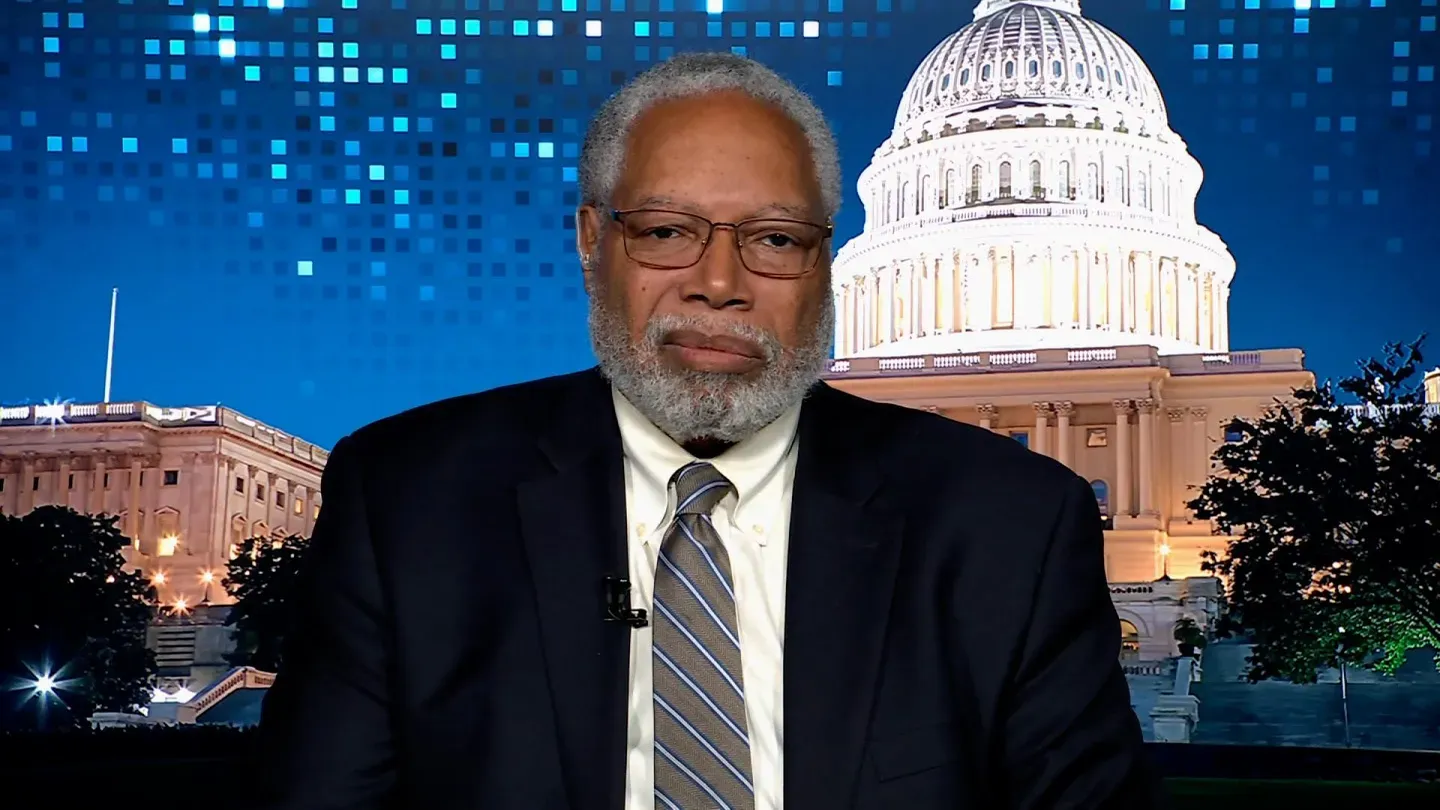
Lonnie G. Bunch III; Dave Eggers; Jon Meacham
Secretary of the Smithsonian Lonnie Bunch reflects on America’s history and how we should be remembering it on the eve of its 250th anniversary. Dave Eggers discusses his new novel Contrapposto,” a love story that examines the value we place on human creativity. Historian Jon Meacham reflects on the impact WWII had on shaping America and the world in his series “World War II with Tom Hanks.”
Problems playing video? | Closed Captioning Feedback
Problems playing video? | Closed Captioning Feedback
August 27, 2026
8/27/2026 | 55m 49sVideo has Closed Captions
Secretary of the Smithsonian Lonnie Bunch reflects on America’s history and how we should be remembering it on the eve of its 250th anniversary. Dave Eggers discusses his new novel Contrapposto,” a love story that examines the value we place on human creativity. Historian Jon Meacham reflects on the impact WWII had on shaping America and the world in his series “World War II with Tom Hanks.”
Problems playing video? | Closed Captioning Feedback
Where to Watch Amanpour and Company
Amanpour and Company is available to stream on pbs.org and the PBS app.
Watch Amanpour and Company on PBS
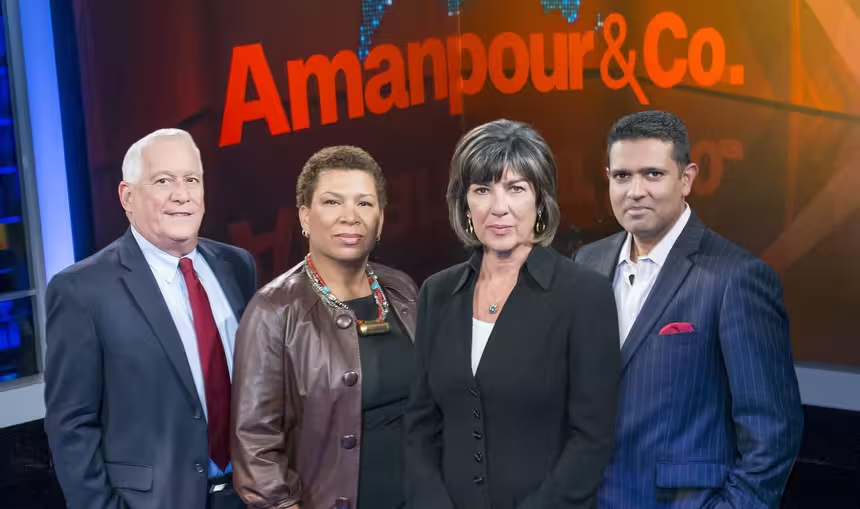
PBS and WNET, in collaboration with CNN, launched Amanpour and Company in September 2018. The series features wide-ranging, in-depth conversations with global thought leaders and cultural influencers on issues impacting the world each day, from politics, business, technology and arts, to science and sports.Providing Support for PBS.org
Learn Moreabout PBS online sponsorship(air whooshing) (upbeat music) - Hello everyone, and welcome to Amanpour & Company.
Here's what's coming up.
- I think it's really important that we have a commitment to telling the complete story of America.
- [Christiane] America turns 250 under a president who's been pushing his executive power to the limits, waging war often against history itself.
I ask Lonnie Bunch, the head of the Smithsonian, how the country should be approaching this milestone birthday.
Then... - We're about to lose an entire generation who will never speak authentically in their own voice.
- What do we really want from art and how can we protect human creativity as AI keeps gaining ground?
I sit down with novelist Dave Eggers to explore those questions and his new novel, "Contrapposto".
And also ahead... - It begins in a very familiar way, strong versus the weak, a desire for territory, a desire for nationalistic control.
- [Christiane] Learning new lessons from the darkest corners of the past, historian Jon Meacham tells Walter Isaacson about his epic 20-part World War II documentary series narrated by the Oscar-winning actor, Tom Hanks.
(upbeat music) (upbeat music continues) (upbeat music fades) - [Announcer] Amanpour & Companyis made possible by the Anderson Family Endowment, Jim Attwood and Leslie Williams, Candace King Weir, the Sylvia A. and Simon B. Poyta Programming Endowment to Fight Antisemitism, the Straus Family Foundation, the Peter G. Peterson and Joan Ganz Cooney Fund, Charles Rosenblum, Monique Schoen Warshaw, Koo and Patricia Yuen, committed to bridging cultural differences in our communities, Barbara Hope Zuckerberg, and by contributions to your PBS station from viewers like you.
Thank you.
- Welcome to the program, everyone.
I'm Christiane Amanpour in London.
America turns 250 this Saturday, an occasion years in the planning that organizers hoped would bring the country together and get crowds out to celebrate together.
The reality though is proving a little different After President Trump made clear that he wanted to transform the nation's anniversary into his own personal victory lap.
- Just like those patriots of 1776 over the past 17 months, we have taken power back from the far off political class.
They're trying to gain it back, but it's not gonna happen.
We have reclaimed our sovereignty, regained our liberty, restored our prosperity, and we have saved our country.
- So that is President Trump's view, but at the same time, his administration keeps attacking America's diverse cultural heritage and keeps trying to dictate how America should view itself.
The man in charge of keeping the nation's memory has his own views.
Lonnie Bunch is head of the Smithsonian Institution, and he oversaw the creation of the Museum of African American History, roles which have put him at loggerheads with President Trump.
I spoke to him just ahead of the holiday weekend.
Lonnie Bunch, welcome to the program.
- Thank you.
Glad to be with you.
- Well, it is a momentous time for us to speak, especially with you, because of all that you've done to preserve American history and because of the winds of some resistance that seem to be coming the way of American history right now.
But you have said that the 250th anniversary is the perfect time to explore and explain our country.
How so?
- Well, in many ways, it's an opportunity to actually get people to think about history and to help people understand what history really is, that history is really about ambiguity, complexity, nuance, debate.
And so the more that we can help people understand the complexity of this nation, the diversity of this nation, the better it is, because in many ways, history is as much about today and tomorrow as it is about yesterday.
And this is one of those moments to use yesterday to help shape today.
- Except for that the administration, this current one doesn't seem to want to do that.
Just in terms of diversity, you know, since 2.0 in the inauguration, there's been an active anti-DEI, even the Smithsonian, even you are in the crosshairs.
How do you rise above that?
- I think it's really important that we have a commitment to telling the complete story of America, to tell a story that really is a story of many peoples who have shaped this nation.
Some that people want to not talk about.
But I think our job is to say, "How do we tell an accurate history driven by scholarship that's nonpartisan, that challenges America to live up to its ideals, that celebrates America, but also celebrates that the great strength of America as the people have voted, debated, pushed to help America live up to those ideals?"
So it's our job to tell an accurate, complex, and truthful history.
- So, before I get to ask you to react to some of what's coming at you from the administration, I want you to talk about in this vein, when you say we have to celebrate everything, everybody, and all the US achievements, you tell a story in your memoir about, you know, as a young historian, you met Princy Jenkins.
At the time, he was a man in his 90s, grandson of enslaved people at a plantation in South Carolina.
And he told you, as a historian, "Your job better be to help people remember not just what they want to remember, but what they need to remember."
How did those words first hit you and how do you think about them now at this time?
- You know, when he said that, I realized that those words were gonna shape the rest of my career, that it really was important to understand what people knew so that you can sort of celebrate those stories, but to also say, but it's also important to understand stories that you may not wanna know because they're all part of shaping who we are.
And so, for me, Princy Jenkins' words are really my North Star.
Every day I think about the fact that he challenged me to make sure I help people become better by understanding the complexity of the past.
- So you've made it very clear that you plan to keep those words at the center of your celebrations, to understand the complexity of the past, not to allow any forces of politics to diminish what you want to show via the Smithsonian.
And there you have co-curated basically the centerpiece of the exhibit for the 250th called "American Aspirations."
What did you set out to do there?
Apparently you chronicle through more than 30 objects taken from the Smithsonian collection.
- What I wanted to do was to say that America is as much an ideal as it is a place, and that many of those ideals really can be traced to Jefferson's words in the Declaration of Independence.
That for me, the Declaration of Independence challenges us to be a nation in pursuit, in pursuit of fairness, in pursuit of opportunity, in pursuit of sort of new horizons.
So what I wanted to do was to take Jefferson's ideas, to say it's important to celebrate and understand those words, because really for 250 years, people have done everything they can to make those words concrete, to make those words accessible, to make those words meaningful to everybody in America.
So I wanted to look at that by saying, "Here are certain aspirations, aspirations of fairness, of hope, and how do we use one or two objects?"
Because as you know, at the Smithsonian, if you come to an exhibition, there are hundreds of objects.
I wanted you to have a very intimate experience.
I wanted you to start by looking at the desk that Jefferson wrote the Declaration of Independence on, and to use those moments to get you not just to look at the past, but to think about what that means to us today.
And so the challenge is really saying, take a few objects, let people have an intimate experience with those objects, and basically use those to have people grapple with what it means to be an American, what it means to understand our history, what it means to understand the fullness of our history.
- And we're looking at some of those images right now.
And of course, Jefferson may be slightly complicated.
I'm gonna ask you what you think about it because while he wrote the basic creed of American democracy that all men are created equal, I like to think he might have added all people in today's world, that he was also a slave owner.
He had enslaved more than 600 people over the course of his life.
How do you reconcile that contradiction?
How should people all these years later reconcile that?
- I mean, I would suggest that one of the ways to understand Jefferson is to understand who he was in the fullness, that he was a slave owner, that he understood what the lack of freedom meant because he saw it every day.
And yet I think the challenge is to recognize that through the words, even though his words were not for everyone, we've taken those words and said, "They're part of who we are as Americans."
And so what you see is whether it's women, abolitionists, immigrants, using those words to say, "We just want America to live up to those ideals that are outlined by Jefferson."
So, for me, Jefferson is a complicated person.
Race is really crucially important to understanding who we are as a people, but it's also important to say those ideals that he penned are ideals that people have now seized and tried to make them accessible and meaningful to everybody.
That's the challenge and that's the contradiction.
- And again, it's especially the challenge now, as there seems to be a deliberate attempt to roll back and to sort of almost sideline that history.
And we're also in a moment, I mean by the administration, not by people, but by the administration, we're also in a moment where one of the other key principles of America, i.e, the welcoming of, you know, bring me your tired, your huddled masses, is also under threat.
And as part of your collection here, you also have a model of the Statue of Liberty.
It's the one that we know it was designed by the French designer Frederic Auguste Bartholdi, presented to the United States in 1884.
And let's not forget that she stands on broken chains.
Tell me what that means.
What should people know about that today in the context of the idea of migration and refugee and asylum?
- I mean, in many ways, the role of the Smithsonian is to give you different lenses into a subject, to give you more complexity.
And so on the one hand, when you take that maquette that really was a gift from France to the United States, we now see it as a symbol of immigration, right?
The Emma Lazarus poem, and it's something that has greeted so many immigrants coming into New York Harbor, and that's unbelievably important and very, very powerful.
But it's also the fact that she is standing on broken chains and that it was really given to us by France to celebrate the fact that the United States abolished slavery.
So, in many ways, what I want people to understand is that, yes, it's a story of immigration and it raises fundamental questions about how we are a nation of immigrants and what does that mean?
But it also helps us understand that slavery was so central that even the French said, "We celebrate America because they took that amazing step to abolish slavery in 1865."
- So let me now bring up some of the invectives, if I could.
I know you use that term from the president himself.
Quote, "The Smithsonian is out of control," in caps, "Where everything discussed is how horrible our country is, how bad slavery was."
Respond.
- Well, I think that first of all, if you go through the Smithsonian, as I do almost every day, and you look at the stories we tell, it is a complex story, but it's a story that celebrates America in many ways, but also argues that there's nothing wrong with helping a nation realize that it's a work in progress, that people have struggled to end slavery, struggled to make sure there was fairness in terms of issues of gender.
So, for me, it really is not saying we're trying to criticize America or say what a horrible place.
We're just simply saying you celebrate America, because in some ways America has grappled with some of the greatest challenges it's faced.
And that for me, what's important is I believe that Americans are this amazingly brave people who defeated Nazism and the like, and it scares me when people aren't brave enough to face their history.
And in some ways, you have to face it anyway.
You know, there's no way of running away from the impact of immigration or the impact of labor issues.
So, for me, it's really an opportunity to basically say, "Let us understand America."
We celebrate, we commemorate, but the goal is to understand, and you can only understand that when you grapple with the complexity of who we once were, it shapes who we are today and hopefully can point us towards a better future.
- And it's hard.
It's a challenge for you.
I mean, you have been in the crosshairs, the Smithsonian has been in the crosshairs of this administration.
There was an executive order by President Trump accusing the Smithsonian of promoting, quote, "Narratives that portray American and Western values as inherently harmful and oppressive."
And it's called for an end to your spending on programs and exhibitions that, quote, "Degrade shared American values, divide Americans by race, or promote ideologies inconsistent with federal law."
Is that what you do, Secretary Lonnie Bunch?
- You know what we do?
We try to tell a complicated story that is driven by the best nonpartisan scholarship we have.
And that candidly, I learn when everybody offers criticism, I listen.
I say, "Are we doing the best we can?
How do we convey the stories in a way that the public will understand?"
But the reality is the North Star for us is the notion of how our scholarship helps America understand the complexity, the nuance, the subtlety.
It's a hard thing to do.
Many people want simple answers to complex questions.
Our job is to sometimes do that, but more importantly, give you questions and answers that will make you understand the complexity of who we are as a nation.
And I take great pride in what the Smithsonian has done.
It is not a place that attacks America.
It is a place that celebrates America by helping people understand the complexity of who we are.
- You know, I was struck by some of the research I read and you spoke about a meeting with President Trump and I believe you showed him around the Smithsonian.
And you had a different experience with him that some of these posts would suggest on Truth Social or some of the executive order writings, or some of the things that some of his lieutenants, for instance, write, like Russell Vought, who is basically saying, "We wish to be assured that none of the leadership of the Smithsonian Museums is confused about the fact that the United States has been among the greatest forces for good in the history of the world."
Tell me how your actual meeting with Trump at the Smithsonian went.
- Well, that was a tour I gave him of the National Museum of African American History and Culture where I was the founding director.
And candidly, it was a tour where we grappled with the challenges and he came out saying it was a good experience.
And so in many ways I felt that part of the job of the Smithsonian is to give everybody an opportunity to educate, to be educated, to learn something new, and I think he learned something new as he walked through the museum.
You know, I think that it's important that I am not trying to say the Smithsonian versus the administration.
All I'm trying to do is to say that we want to help America and we're doing the best we can by being nonpartisan and really being driven by the best scholarship.
- And how is it going, the exhibit?
Are you getting floods and floods of crowds and things?
And I also want to ask you how this careful line that you have to tread as the leader of this great cultural institution at this time, how has it been affecting you?
- Well, I mean, first of all, the Smithsonian has some of the best attendance it's ever had in recent years, and there's a lot of people going to see the exhibitions because they wanna sort of understand America through different lenses.
You know, for me, I am lucky because I get to work with 7,000 gifted public servants every day whose job it is, whether they are scholars or educators or designers, their job is simply to say, "We wanna help a nation better understand itself."
And they do it with amazing dedication.
So whenever I feel, "Oh my goodness, I'm being attacked," I dip into that reservoir that is the Smithsonian, that is the staff, that is the history of the Smithsonian, that for 180 years, the Smithsonian has grappled with science, art, history, culture in a way to help Americans dip into that and better understand themselves.
That keeps me going no matter what.
- And you're so devoted obviously and so passionate.
The New York Times has written that the American Aspirations Exhibit, which you curated, will probably be the last exhibit you will create, quoting you.
- Well, you know, there's a difference in saying I may not curate another exhibition versus how long I'm gonna stay as secretary.
I think that's a distinction.
- Okay.
- You know, I mean, I think I don't have much time to curate anymore.
- That's what I was trying to get at.
- Yeah, I know.
You know, the reality is that I've been secretary for seven years.
This is my 37th year at the Smithsonian.
It's a place I love better than anything else other than my family and the New York Yankees.
Other than that, the Smithsonian's what I care about.
And so I'm committed to doing everything I can to help the Smithsonian continue to build on the amazing traditions of 180 years.
At some point, I will step down, but the reality is that as long as I can sort of have the support of the staff, of the Board of Regents, and really do the work that the American public enjoys and is getting engaged by, I'm very lucky to be the Secretary of the Smithsonian.
- And we are lucky to have you on our program.
Thank you so much for helping us all celebrate the important diversity of America at 250 years old.
Lonnie Bunch, thank you so much.
- My great pleasure.
Thank you.
- Now to a novel that reflects on art, the artist, and the things that sometimes get in the way.
"Contrapposto" is the latest project by author Dave Eggers.
It's a coming of age novel and a love story that asks about the value we place on human creativity in a world adjusting for AI.
And I sat down with Eggers here in London at his publisher's headquarters to talk about the novel and the premium he puts on slow art, AKA reading and writing.
Dave Eggers, welcome back to our program.
- Thank you for having me.
- So, tell me, "Contrapposto," am I pronouncing it right?
- It's as close as I could get too, yeah.
- What does it mean?
Why did you call your new book that.
- Well, I went to art school for a bit, and in art school, it's like first day, life drawing, it's the most common pose, which is sort of Michelangelo's David, you're on imbalanced, you're on leaning on one foot, tilting shoulders this way, hips another way.
It's like a dramatic narrative pose.
- And I read one of the reviews, they're quite funny.
You do go off on all your rants, which I'm gonna get to.
But one of the reviews, you invited the interviewer, the critic, to paint or draw with you.
- We still do a lot of it.
We bring models into our office at McSweeney's.
We hire them and all of us art school refugees that work at our company draw from life.
It's a joyous, meditative kind of thing.
Nothing comes of it, nobody sees these drawings, but we have two or three hours of sort of bliss.
- And did it get you into the mood for this particular novel about being an artist?
- Yeah, I picked up my life drawing again.
I hadn't done so much of it since art school, so I had to refresh my memory, but it's been something I've been doing a couple times a year ever since I was 22.
- So finally you've written the novel about the artists, right?
So we'll get into the story, but I first wanted you to read a little bit of a passage about the concept of drawing.
- This is Cricket, who's a young art student.
- And the protagonist.
- Yeah.
"Because he'd had an hour though, Cricket had time to sketch, then correct, then sketch, then refine.
He measured proportions and improved.
He grew more confident with each pass on his drawing and realized, was almost embarrassed to finally realize that much of the rightness of the drawing, of any drawing came through time and diligence and discernment.
It came from work and humility.
Being able to recognize if something is wrong and knowing how to address it.
There was room for talent.
Yes, talent was much of it, but he was surprised by the role of sheer doggedness, the determination to get it right."
- So I'm impressed by, when you read that paragraph, you really are promoting the art of slow, doing things well, having the patience to accomplish whether it's writing or drawing, and it stands in deep conflict to everything that is so fast right now.
- I think right now if you teach- - Or contrast.
- Yeah, if you teach kids the same methods, you know, you learn how to draw with proportion and spending hours, we would still spend three hours on one pose to get it right.
Anybody can be taught academic, accurate drawing, and really the ability to see, truthfully.
And so, I think, yes, it's such an antidote to this immediate gratification, but we teach it with young writers too.
Diligence, humility, revise, revise, revise.
- So I want you to give me your anti-AI rant.
What do you say to a 10-year-old, for instance, who wants to be a writer?
- You have a 10 year old who is unprecedented in the history of the world, there's never been anyone like that person, it can't be.
And so they have so much to say.
They have seen the world only the way that they can see it.
So to think about that one of a kind in the history of humanity person shopping their vision out to a machine, how tragic that is.
That's beyond dystopian.
It cannot be allowed.
Not even one ounce of AI can be allowed in the humanities and youth education.
- So that's a pretty bold declaration.
I absolutely get where it comes from because you're a creative, because we're all individuals and no machine can do what we can do, but are you swimming against the tide?
- I think this summer is the summer.
If you talk to teachers, everybody's trying to get policies in place and get it straight before the fall.
And most teachers I talk to are absolutists, no amount of AI is safe.
And they spend 20 hours a week policing their kids now.
Did they cheat?
Did they use this?
Did they do that?
So it's made public education teachers, their jobs so much more difficult.
It engenders suspicion and engenders this unlevel playing field, and it most affects kids who are learning the second and third language, who are most inclined to cheat because they wanna reach grade level quicker.
So, for every one of those students, they become voiceless.
So we're about to lose an entire generation who will never speak authentically in their own voice unless we say none at all through K through the last year in college.
- Whoa, K through the last year in college.
- It solves nothing.
There was never a problem that this tool solved.
We were doing quite well as writers.
In this country, you had a few good writers.
And so what was it there to solve?
Nothing.
It improves nothing in the humanities.
- So now let's get to the story of "Contrapposto."
So it's Cricket and is it Olympia?
- Olympia.
- Exactly.
And they meet as young kids at school, right?
And they want to be artists.
So it's that journey plus their own relationship.
Give us a little synopsis.
- Well, they meet when he's nine and she's 10 and she's this exotic, much more worldly, eloquent knowledgeable person.
And she gives him his first public commission, which is to deface a public play structure with horrible things.
But they say these horrible things and he writes them in old English calligraphy to make it artful.
And so that to him is his first platform, his first authentic outside audience.
And forever after that, he's devoted to her.
- And does he get what happens to him for defacing this?
And it's pornographic, you say not nice things, but- - Yeah, I don't know what we can say on- - You say it.
- It's pretty pornographic.
He doesn't know what any of these words mean.
He's so sort of naive.
- She does though, right?
- She knows much more always than he does.
- Well, why is she egging him on into that?
- Well, she's more of a curator.
She's a forever after, it goes through 66 years in their lives.
She's always trying to pull him out of obscurity, his stubborn unwillingness to compromise even a little bit and to give him a gallery show or bring him into the professional art world.
And every tiny little concession he can't make, he can't countenance these little compromises, but it frustrates her to no end.
But forever, they're still committed, devoted to each other.
- You've written obviously a number of novels.
And you've said that compared to nonfiction, it is much more fun.
Tell me about, especially today maybe, writing novels.
- Well, I sort of alternate.
I write nonfiction mostly out of a sense of outrage and it's not a good way to spend every day.
And then of course, the nonfiction slog of write four words, you have to check that fact.
You write four more words, you have to check.
Fiction is just fluid, it's liberated, it's totally untethered.
I think I had to check three facts at this point.
Like, late in the game I referenced Turner and somebody said, "Well, there's more turners at the British Museum or at the Tate than there are the British Museum."
That's the only fact I remember anybody checking.
- And that was true.
- Yeah.
I mean, as a backpacker, I saw the Turners in the British Museum, but I guess it was more at the Tate.
So that was the only real change that was made on a factual level.
But it's so much more enjoyable on a day-to-day basis.
And to wake up without an ulcer, you know, to wake up without thinking about Trump, wake up without thinking about destruction of certain tech companies.
So this was a very healing bath.
- It's hard to wake up without thinking about Trump because he is everywhere all the time, always.
- Yeah, that's his intention.
- You did write, one of your previous books was "Captain Glory?"
- [Dave] "The Captain and the Glory."
- There you go, "The Captain and the Glory," which I read, and we did actually interview you, but remotely.
It was one of the best books about Trump that I've ever read.
- Thanks.
- It was incredibly well constructed in terms of it not just being a satire, but that whole dynamic of the master and everybody he's trying to trying to rule.
Remind us about what you were trying to say then, and is it worse in 2.0 than you could have ever imagined?
Because this was written in 1.0.
- Yeah, somehow I wrote that thinking this would have a dent or make a dent in his supporters or his presidency.
Somehow this satire did not end Trump's reign.
It was very humbling.
And then he got elected again, which I never would have thought in a million years.
So I'm very disappointed in my countrymen.
It's still baffling to me.
But I do think we're on the very, you know, we have a little bit of time left.
Midterms come, impeachment comes after that, crippled second half of his term.
We don't have long to wait.
I've been guaranteeing everybody in Europe.
- You've got the whole thing mapped out.
- I have every date, I keep a calendar.
We're gonna publish it of every date from here on out, and so it will kind of mirror the second half of his first term where he was just fighting lawsuits and subpoenas the whole time.
- But what would you write today if you were writing "The Captain of the Glory" with 2.0 in the rear view mirror?
- Well, really what I would like to write more about is undocumented immigrants hiding in churches.
So I was working on a book called "The Recent History of Families Hiding in Churches," because in both terms, it's the last place ICE will go.
So every church in rural counties all over America, there's families living in churches.
And it's so un-American, it's so profoundly sad that we live under this veil of hate and suspicion and we're okay with families hiding for years at a time.
- And then you write this sort of redemptive book about joy and art and relationships and contacts in your latest book, "Contrapposto."
- Yeah, you have to, I think, give a little bit to that, to the outrages of the day, and then you have to reserve some time, some space to do something about what you love.
So it's sometimes what you hate, what you loathe, what you wanna change.
This is really just a celebration of art and the thing that I grew up sort of loving most.
- One of your other major books was "The Circle."
Again, it was taking on the idea of tech and us being ruled by tech, and I think it was made into a film with Tom Hanks.
- Yes.
- There you go.
People who haven't read the books surely have seen the film.
Again, it was how do you sort of get yourself out of this control?
And I'm just kind of struck by how you still only have a flip phone as far as I can gather, how you take yourself off to your boat in San Francisco to write so that you're not tempted.
Tell me a little bit about your working habits, your mental health, your resistance to tech.
- Yeah, I was enjoying life a lot before all of this came about, so none of it was solving anything that I needed to solve.
So there's nothing on a smartphone that I wanted.
I would use one if there was something on it that I needed, but there isn't.
And so, yeah, I have the flip phone.
It doesn't work abroad, so it's just a rock in my pocket right now.
But I do have to be really far away from the internet to get any work done.
So if I'm tempted, or if I have it like in the hotel tonight, I will have the internet and then I'll spend four hours on YouTube.
And so I can't be trusted around the internet, but mostly I need isolation.
I need to be free for eight hours a day to get anything done.
And that's about eight hours on the boat in the writing position to get maybe 45 minutes of actual work done.
That's my ratio.
It's very sad.
- Wow.
Eight hours to get 45 minutes.
- [Dave] Sometimes maybe an hour's worth, I mean- - Well, it's important to know that for movie writers.
- Yeah, you do need to sort of give yourself selfishly that amount of time.
- I mean, and yet to be fair, writing has always been called a lonely job, a lonely business, a lonely craft, because you can't sit around, unlike for a TV program where there's a writer's room and all the rest of it, right?
I mean you- - Well, it's lonely until, and then you get in community.
So I come home and my wife, who's a novelist, she has to read what I wrote.
And then if she likes it for many years, for decades, the next reader was my old high school teacher, Peter Ferry.
He got stuck reading every manuscript after Vendela.
And until he passed, he was still my teacher.
And then after that, there's always a community of writers in any given city where you reach out to each other, you meet up, you talk through things if you're stuck.
So it doesn't have to be quite as lonely and solitary as (indistinct) would provide.
- So, I mean, what you're saying sounds really hopeful.
It does.
It sounds hopeful.
It sounds full of context, full of possibility, full of joy, full of community.
That must raise your optimism quotient in a world which obviously you find quite difficult to navigate politically right now.
- Well, I go from here to the Ministry of Stories, which is a writing center for kids that Nick Hornby and some other friends started.
- The novelist Nick Hornby.
- Yeah.
And so there, every day, including today, there'll be a field trip where all kids from all ages will gather together with tutors, adults, and they'll work one-on-one, handwriting poems and stories that they'll publish in beautiful books.
So, over the years, all of these writing centers, it started with 826 Valencia in San Francisco.
There's 74 around the world now.
We've published about 10,000 books over that time, all written by kids, and now we have a repository called the International Library of Young Authors in San Francisco.
It's all books written by kids.
So if you give them the space and encouragement and then you lift up that work, you amplify it, you put it in a book, you put it in a library, kids will always choose to work with a human.
They will always choose, they will run through walls to be published.
But if we assume all they want is digital media, then they get it and they have no choice.
We have to give them a choice.
They do want human contact.
They do wanna write.
They do want their authentic voices heard, but we have to give them that chance and we have to be shoulder to shoulder with them, shining a light on that.
Every time, we've been at it for 25 years, I guarantee they want it.
Always they will choose the human, they will even choose paper.
We have zine writing classes, handwriting, everything.
They will always choose that, but we gotta give them the choice.
- So just quickly, because I have to ask you, there's many regulations afoot in Australia and Britain everywhere to try to keep under 16s off social media.
- I'm all for it- - And you think it works?
They won't just find workarounds?
- They will sometimes find workarounds.
My kids are 17 and 20, they tell me about every workaround, but we do have to protect them.
It's like we protect them from so many things that we know are dangerous.
Cigarettes, alcohol, steroids, vaping, whatever, we all have regulations about everything because we care about them.
For some reason, this is the Wild West.
Oh, we can't restrict them.
When this thing is like, it has taken so many young lives.
It has made so many millions of kids deeply depressed.
And if you talk to any teenager, my son was just on a two-week retreat.
No phones for anybody.
Best two weeks of his life, he said, because nobody else was online.
It wasn't FOMO.
They didn't have to like worry about what they were doing.
They all want the adults in their lives to make a ruler to protect them.
It's our job to do that.
And when we seed our responsibility, we disserve the young people of this world.
This is a generation at stake and we've got to make a stand.
According to all the science, all the medical studies, every little bit says every extra minute on screens is harmful.
- Well, they will be reading "Contrapposto" and every minute reading will be regenerative.
Well, thank you very much indeed, David.
- Thank you so much.
- We turn now to a new documentary series that's drawing fresh lessons from the most devastating conflict in modern history.
- For six dark years, the world was on fire.
(canon booming) A conflict that toppled empires and reshaped the modern world.
(Hitler speaking in foreign language) No part of the globe was untouched, no life unchanged.
(dramatic music) The Second World War is the largest event in human history.
- "World War II with Tom Hanks" takes viewers across the full scope of the conflict from the rise of fascism in Europe to the fall of Berlin and onto Pearl Harbor, Hiroshima, and the Pax Americana that followed.
Hanks helms the 20-part series, thus continuing his vast contribution to World War II history.
For instance, with films like "Saving Private Ryan."
Jon Meacham is an executive producer on the series, and he spoke to Walter Isaacson about the parallels that he sees between then and now.
- Thank you, Christiane and Jon Meacham.
Welcome back to the show.
- Thank you, Walter.
- You're the executive producer of one of the stars of this 20-part series on "World War II with Tom Hanks."
Tell me why is this a good time to be reexamining World War II?
- So, as Tom says in the narration, it's the largest event in human history.
It begins, as you know, in the 1930s.
We can argue it begins even before that because of the fallout from the First World War.
But it begins in a very familiar way, the strong versus the weak, a desire for territory, a desire for nationalistic control, for racial superiority.
And it ends with the capacity for us to destroy all of human civilization with the splitting of the atom.
And in that arc, you have so many stories, so many instances of how our world now works from the American productive capacity to the ideals of democracy versus autocracy.
And the essential, essential point of never again, of never allowing the attempted extermination of an entire people.
- Well, as you say, it's the most important event, maybe in almost human history or modern history.
What did it really change?
- Well, it ended autocracy at the heart of Europe.
It ended the fascist regimes of Germany and Japan and Italy.
It showed that the democracies, for all of their imperfections, for all of the slow 18th century checks and balances, democracies can rise to the occasion when called upon.
- Well, wait, do you think now that everybody believes democracy is just gonna coast throughout and we're never gonna have rises of autocracy again?
- I don't think there's any coasting involved at all in history at any point, but I do think that the Second World War shows that when the democracies are aroused, we can prevail.
- It's easy to lose sight of the true cost of those years.
The human cost.
We saw human beings at their absolute worst, but we also saw them at their absolute best, willing to sacrifice their lives so that others may live.
(dramatic music) Every single person had a story.
These are the stories that make us who we are.
- It ended 80 years ago, why are people still so fascinated with it?
- You know, either Spielberg or Hanks once said it was good versus evil and grandpa won, and I think there's something to that.
I think, as you know, you and I grew up proximate to the war, right?
Both my grandfather's fought.
Almost everyone, because of the size of the armed forces, had some living connection to that war.
And I think that it continues to be this moment where it feels, and I think it's important to point out that the feeling does not match the reality, it feels as if everything worked.
The problem, of course, with that, and the complication, which goes to your question a moment ago, is I think if you ask many Americans, "What's the most important thing we ever did?"
Some might say the abolition of slavery.
Others I think would say winning the Second World War.
But let's always remember that we only declared war on Nazi Germany when Nazi Germany declared war on us five days after Pearl Harbor.
As Churchill said, "You can always count on the Americans do the right thing once they've exhausted every other possibility."
And you had these forces with which we still contend unto this hour of nationalism at home, of isolationism, of protectionism, this idea of fortress America, this idea that the world's problems are not our problems.
And our politics, everything about our economic position in the world grew out of the Second World War and the tension between, are we going to be internationalists or are we gonna be isolationists?
- You wrote a wonderful book, "Franklin and Winston."
And it's about Winston Churchill.
It's like a love story book.
Winston Churchill courting Franklin Roosevelt and saying, "You have to help us, you have to help us."
Tell us what that courtship did and whether that's what got the US into the war.
- Well, it helped.
So Churchill becomes prime minister on the 10th of May, 1940.
Remember he said, "I felt as if I were walking with destiny and all my life had been preparation for this hour and for this trial.
I was sure I should not fail."
He was the only person who was sure he would not fail.
Roosevelt, who used to keep the cabinet in, he had cabinet meetings on Friday to guarantee they'd work all week, he receives word of Churchill's appointment.
Churchill at that point is 65, which in those days meant something.
You know, he had changed parties three times.
He was a grand old man of British politics, but he was seen as very erratic.
He was seen as a two-fisted drinker.
He was seen as someone who had been wrong about big things in British politics.
And FDR looks at the note and says, "Well, I guess Winston is the best man England has, even if he is drunk half the time."
So this did not begin hugely well.
But what Churchill did, and Mary Soames, his last daughter, last child, Mary Churchill Soames, summed up the whole project for me when she said, when she though of Papa and the president, she always thought of the French proverb, "Love, there's always one who kisses and one who offers the cheek."
And Papa was always kissing, and FDR was always offering the cheek.
Churchill needed to bring Roosevelt into the fold.
And one of the things that I think the American people need to remember, and we tend not to, is how much we owe the British.
How much we owe them for standing between the 1st of September, 1939 and the 12th of December, 1941.
You know, Churchill looked across the channel and said, "Hitler's gone that far and he'll go no farther."
- For the Brits on the beach, it's an absolute hell scape.
They're subjected day and night to constant aerial bombardment by the Luftwaffe strafing, dive bombing, level bombing.
- The British troops are just on the sand and each time this happens, they all take what cover they can.
This goes on hour after hour after hour as they're waiting for deliverance.
- You and I are both biographers and we write about the effect that humans, you know, the human hand has on history.
Sometimes in the academy at universities, they think, "You know, history's made by great forces."
So let me ask you about the two or three people in the core of this.
Had Hitler not come along, had it not been for Hitler, would all of this have happened?
- I don't think so.
I don't think there was, Germany was obviously reeling from the First World War.
There were deep resentments about the Treaty of Versailles, but there was something about his popular appeal, the vicious cocktail, if you will, of evil that he mixed and served the German people.
You know, Churchill writes, Churchill was also, he was an historian, but was better at people than events in many ways.
He has a really interesting portrait of Hitler in "The Gathering Storm."
And it's a tough thing to talk about, but it's worth mentioning.
Churchill says he understood Hitler, not least because if England had been defeated and treated the way Germany was, he understood how a figure like Hitler could arise.
And I think that human element is vital.
- Some of this documentary is so gruesome, it's really hard to watch.
Why was there such brutality in World War II?
- In many ways, I don't want to say it was new in warfare, but the mechanization of genocide, the technology, right?
Weapons were more sophisticated, weapons were deadlier.
And air power brought civilians, the V-1 and the V-2 rockets that the Germans developed brought civilian populations into the calculus, into the field of fire.
And I think technology does wonderful things for us, but the technology of war and the speed with which weapons can fire and be deployed has its dark and lamentable element.
- In less than a month, a major European nation has been removed from the map.
In the first 24 hours of the invasion, the Germans take out railroads, bridges, and airfields.
The destruction paves the way for their army to advance deep into Poland.
- Polish civilians experience modern war in an unbelievably horrifying way.
They see people killed.
It's a nightmare.
- The Poles have a modern army, it's the fifth largest army in the world, and it's equipped with modern tanks with all sorts of artillery and armored trains, but Hitler has been putting almost all his resources into equipping the military.
The Poles were outgunned.
- [Tom] Despite those odds, the Poles are determined to defend their country.
- What surprised you making this documentary?
- I am always surprised at the pure scope, the fact that no part of the globe, the smallest Pacific Island, the largest European nation is involved and touched by this.
And the other that surprised me is I'm always dazzled by what the arsenal of democracy, to use FDR's phrase, could accomplish.
We were the 17th largest army in the world when Hitler invaded Poland, the United States.
And yet by 1945, we had sent millions of men, millions of women had been engaged in war work.
The creation of immense, they were weapons at that time, but it set the stage for the creation of the great post-war middle class.
It helped shift the sense of American reality that helped make the civil rights movement possible.
It's the largest event in human history.
- You talked just now about how we were able to gear up suddenly from being the 17th largest military, and this seems to have lessons for us today, which is how could we?
And Tom Hanks stresses this in the thing.
How could we so quickly start making things?
- It's the ingenuity and the wonders of capitalism.
Detroit was ready, right?
Americans made things.
That was what was so remarkable.
We'd linked the continent with the railroads.
Public schools had been coming along.
Dwight Eisenhower, I think, was the first American president to go to a public high school.
There were only something like six or seven people who made it all the way through the Abilene school system because so many other kids got pulled out to work.
But you had a spreading power of education that helped create people who could be engineers and who could be skilled workers.
And you saw the remarkable capacity of not just democracy, but democratic capitalism to respond to a crisis.
- Well, let me then put some points on what you've just been saying and what this documentary said that seem relevant to today, which is we decided the importance of education.
We figured out how to create a middle class that had secure jobs and good wages.
We decided how to make things.
We understood the values of democracy.
We knew that we'd have to get involved in the world to stop tyranny.
Do you think that all those lessons, we still hold them as true today?
- It's part of the reason to tell this story.
I worry all the time.
I think all of us have to, given the last decade in which nationalism, which is an allegiance to your own kind, has prevailed over a definition of patriotism, which is an allegiance to a creed, that whoever pledges allegiance to our declaration about what you've written, to our constitution, to our rule of law, then you can belong.
Nationalism, which was at the heart of the fascist enterprises around the world, is a durable and sneaky virus, and it is part of the human body politic.
And we have to fight it, and it recurs, and it's recurring today, not just in the United States, but around the world.
And so the lesson of the Second World War seems to me to be as clear and as resonant and as relevant as it has been at any point since 1945, which is the rule of law, the sanctity of the individual, and a sense of international order in which we see each other not as enemies, but as neighbors.
If we fall away from that, chaos results.
And we saw that in the 1930s and 1940s.
We saw it in the 19 teens, and there are autocrats on the march around the world.
And what we have learned at our peril is that if we let them march freely, chaos results.
- Tomorrow, we celebrate our 250th, July 4th.
There's actually a wonderful speech that I think Franklin Roosevelt gives in 1941 about the "Four Freedoms," and he invokes the Declaration of Independence.
Tell me what you've learned from this documentary and what you're gonna be thinking about on July 4th.
- What we have to remember on the 4th of July and every day is that that was the day that American scripture really came into being.
Every generation can judge itself by the degree to which it lives into the Declaration or the degree to which it falls from it.
That was true in Seneca Falls, it was true for Frederick Douglass, it was true, as you say, for Franklin Roosevelt, who said in his State of the Union in 1941, he listed the four freedoms, freedom from fear, freedom from want.
He listed them and the phrase in the speech was, "We must defend freedom from fear everywhere in the world."
And he repeated the phrase, "Everywhere in the world."
And when he was practicing the speech, his aide, Harry Hopkins, said, "You know, Mr.
President, I would cut the phrase everywhere in the world because nobody gives a damn about, no American gives a damn about whether there's freedom in Java."
And FDR looked at him and said, "Well, Harry, the world's getting so small, they're gonna have to care."
And I think it was true then, and Lord knows it's true now.
- Jon Meacham, thank you so much for joining us.
Appreciate it.
- Thanks, Walter.
- An epic series indeed.
And that is it for our program tonight.
If you want to find out what's coming up on the show every night, sign up for our newsletter at pbs.org/amanpour.
Thank you for watching.
Happy July 4th weekend on this 250th anniversary.
Happy birthday, America.
Goodbye to all of you from London.
(gentle music)
 New Episode
- News and Public Affairs

Top journalists deliver compelling original analysis of the hour's headlines.
 New Episode
- News and Public Affairs

Today's top journalists discuss Washington's current political events and public affairs.

 New Episode
 New Episode
 New Episode
 New Episode

 New Episode
 New Episode
 New Episode
Support for PBS provided by: